



Why Utility Companies Choose Modul-System

-
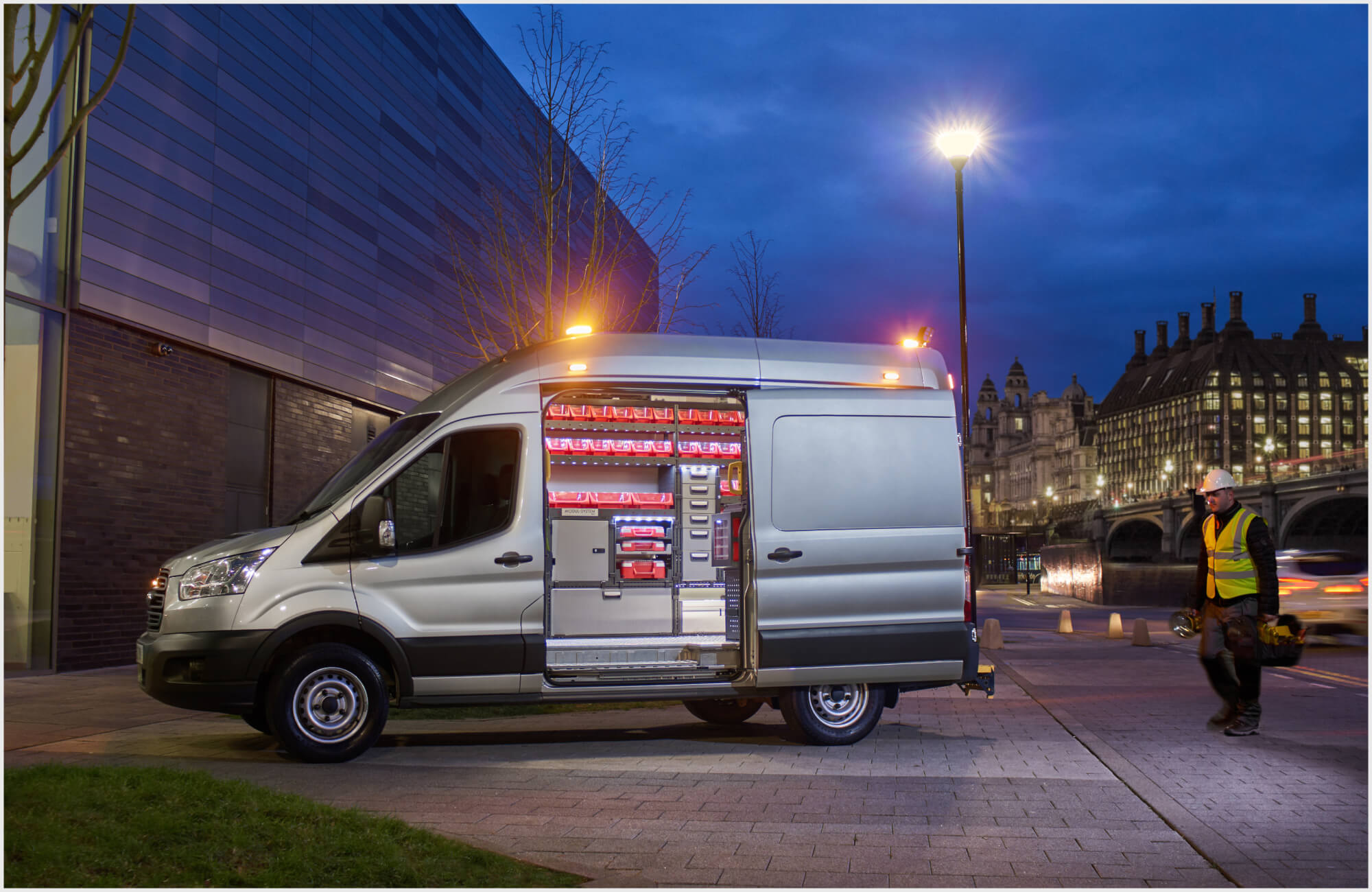
Why Utility Companies Choose Modul-System
Your engineers need a van built around the job. Your business needs that van to pay its way for the life of the fleet.
Utility engineers work against the clock. They respond to faults, carry out planned maintenance and move between sites all day, often in poor conditions. The van holds every tool, part and piece of test equipment they need. When the layout is wrong, time is lost on every job, payload is wasted and the risk of running overweight goes up.
Modul-System designs the van around the work. We start with how your engineers use their vehicles today, then design, build, fit and support a conversion that matches it across the whole fleet.
How we build the right van with you
1. We measure the job. Modul Workspace Intelligence uses heat mapping to record how engineers use the load area: which storage positions they open, how often, what is never touched and how much weight is carried.
2. We design from the evidence. Frequently used equipment goes where engineers reach it first. Equipment that is carried but never used is identified, so it can come out of the van.
3. We build and fit to one standard. Conversions are manufactured in the UK and bonded in place with structural adhesive rather than drilled into the vehicle body.
4. We hand over and stay with you. Engineers are shown how their new layout works at our familiarization day or handover. After that, a network of more than 1,200 agents on a single 0800 number keeps vehicles working across your operating area.
SGN is already applying this approach in a live trial across its first response and maintenance gas engineering vehicles, building on a relationship covering more than 350 vehicles over eight years.
What it means for the fleet manager
Vans laid out to how engineers work, not how a standard kit happens to fit. Modul-Connect brings vehicle and operational information into one portal and app. The Tool Management System shows where tools are, which van they are assigned to and when maintenance is due. Van security combines alarms, sensors, real time alerts and vehicle location. On-board weighing lets you check a vehicle is within its limits before it leaves the depot.
e-Power supplies managed auxiliary and AC power for laptops, diagnostic equipment and chargers, with roof solar to extend it. The E-Heater keeps the van usable in winter without a diesel heater.
What it means for the finance director
Every kilogram the conversion weighs is a kilogram the van cannot carry for work. Modul-System Ultra-High Strength Steel racking is up to 40% lighter than equivalent traditional steel. Composite and fibre-glass floor options take out more. On one recent fleet conversion, the fibre-glass floor saved 23kg and e-Power wiring and smart brackets a further 10kg, part of an estimated 91kg total payload saving.
On electric vans, where the battery already takes a large share of payload, that margin decides whether the vehicle can do the job at all.
The conversion also outlasts the van. One customer removed its Modul-System racking after eight years of daily service and had it refitted into the replacement vehicle. Heat mapping shows the equipment and stock being carried and never used, which is money tied up on the road. Removing the diesel heater removes its fuel cost.
What it means for the managing director
An overweight van is a roadside enforcement risk for the business and a safety risk for the engineer driving it. On-board weighing gives you evidence that vehicles leave the depot within their limits.
A van that works for the engineer means more time on the job and less time searching the load area, which shows in response times and first time fixes for your customers.
Modul-System has the capacity to support a national fleet: UK manufacturing, increased UK stockholding and more than 1,200 agents. Our Wooburn Green site runs on 100% renewable electricity, and our embedded carbon tool helps customers include their conversions in Scope 3 reporting.
Talk to us about your fleet
We will look at how your engineers work today, show you what the data says and propose a conversion built around it. Call [0800 number] or email [address] to arrange a conversation.