



Making Electric Utility Vans Work Harder: Why Heating Matters

-
Making Electric Utility Vans Work Harder: Why Heating Matters
For utility companies, an electric van has to do much more than simply replace a diesel vehicle. It needs to get an engineer to site, carry their tools and equipment, provide a comfortable working environment and remain productive throughout the working day, often starting before sunrise and operating in cold, wet conditions.
That makes heating an important part of the electrification equation.
The challenge is that heating an electric van can place a significant demand on its main battery. For utility fleets, where vehicles can spend long periods on site with the engineer inside, that can affect the energy available for driving.
The Modul-System e-Heater provides a practical way to address that problem.
Keeping engineers comfortable without compromising the vehicle
Utility engineers don't work from a desk. They can spend hours moving between jobs, working at the roadside, carrying out repairs or installations and waiting for equipment or access. During winter, having a warm cab and load area isn't simply about comfort. It creates a more practical working environment for the person responsible for getting the job done.
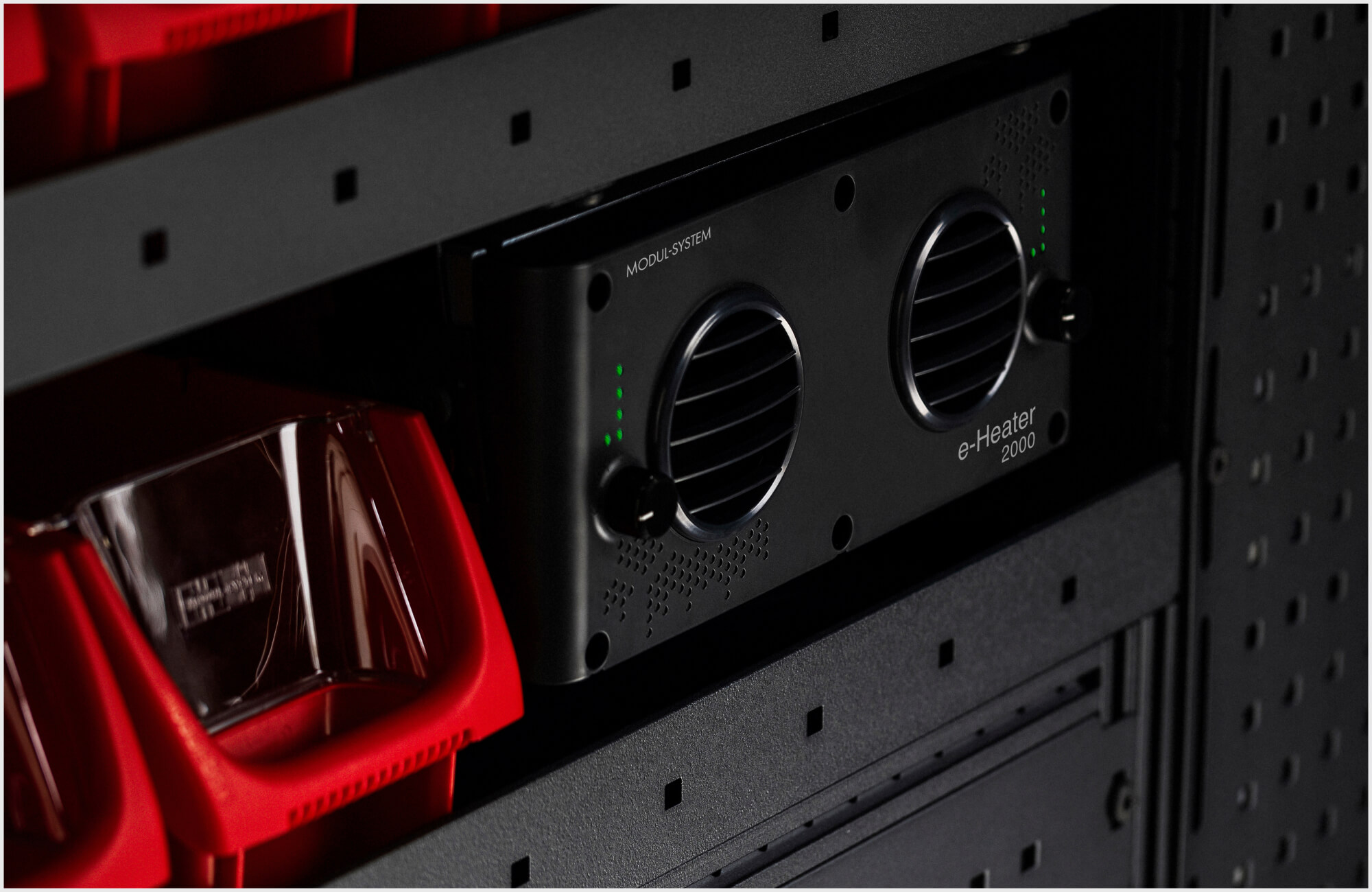
The Modul-System e-Heater provides fully electric heating for both the cab and load area, available in 1000W and 2000W configurations. It means engineers can start the day with a warm vehicle, maintain a comfortable temperature between jobs and heat the working environment without relying on the van's traction battery alone.
For the fleet operator, that separation is important. The heating system uses Modul-System's e-Power auxiliary lithium battery system, allowing the energy required for heating to be managed separately from the vehicle's primary driving battery.
More usable energy for the working day
For an electric utility van, every element that consumes energy has to be considered. Heating the cab. Heating the load area. Running equipment. Charging devices. Driving between jobs. The more efficiently those demands are managed, the more usable the vehicle becomes.
e-Power is charged at the depot and can also be replenished in transit through a DC-DC charger. This gives fleet managers another way of managing the vehicle's energy requirements while helping ensure that heating doesn't unnecessarily compete with driving for battery capacity.
For the engineer, that means less concern about whether using the heater will affect the vehicle's ability to complete the day's work. For the fleet manager, it means a heating solution designed around the realities of operating an electric commercial vehicle.
Designed around the way utility fleets actually work
Utility fleets are rarely made up entirely of brand-new vehicles. Vehicles are replaced over time, while existing vans can remain operational for years. That means operators need technologies that can be introduced into vehicles already working in the fleet.
The e-Heater has been designed as a retrofit solution, with installation that does not require floor penetration or drilling into OEM no-drill zones. That allows operators to improve the capability of existing electric vans rather than waiting for the next vehicle replacement cycle.
It can therefore form part of a wider fleet electrification strategy rather than being something that has to wait until the entire fleet has changed.
Eureka moment: it removes the need for diesel heating
There is another issue that utility operators increasingly need to consider. Some electric vans have traditionally used diesel-powered auxiliary heaters to provide additional heating. That requires a separate diesel tank, fuel, pump and exhaust system — effectively introducing combustion back into a vehicle designed to remove it.
The e-Heater removes that requirement. There is no fuel tank, no exhaust and nothing burning.
For utility engineers working outside homes, schools, businesses and residential streets, removing combustion at the vehicle also means removing the associated exhaust emissions from the places where they are carrying out their work.
A more measurable approach to fleet efficiency
The benefits also extend beyond the engineer and the individual vehicle. Modul-System's experience with SGN demonstrates the potential at fleet scale. Twenty-two e-Heaters have already been installed, with the system calculated to displace 2,508 litres of diesel and 6.74 tonnes of Scope 1 CO‚ over a five-year replacement cycle based on 100 heating days per year.
Future e-Heater installations will also operate with Modul-Connect, providing visibility of heating schedules and run-hours. That gives fleet managers the opportunity to understand how the heating system is being used and build measurable information into their fleet and carbon reporting.
For utility companies, electrification is ultimately about making electric vehicles work in the real world. That means keeping engineers comfortable, protecting the energy needed to complete their jobs, reducing unnecessary combustion and making existing electric vans more capable.
The e-Heater isn't simply an alternative way of warming a van. It is part of making an electric utility vehicle practical for the people who depend on it every day.