



Why Connected Technology Is Becoming Essential for Utility Fleets

-
Why Connected Technology Is Becoming Essential for Utility Fleets
The modern utility van is no longer simply a vehicle for getting an engineer from one job to another. It is a mobile workshop, a secure store for expensive equipment, a power source for tools and, increasingly, a connected part of the wider fleet operation.
Yet many utility fleets still manage these functions separately. Vehicle telematics tells you where the van is. Asset tracking tells you where equipment is. Temperature monitoring sits in another system. Vehicle security may be completely separate, while information about weight, auxiliary power and vehicle usage can require manual checks.
For a fleet operating dozens, hundreds or even thousands of utility vehicles, that creates a simple question: why manage all this information separately when it can be brought together in one connected system? That is the thinking behind Modul-Connect.
One van. One connected system.
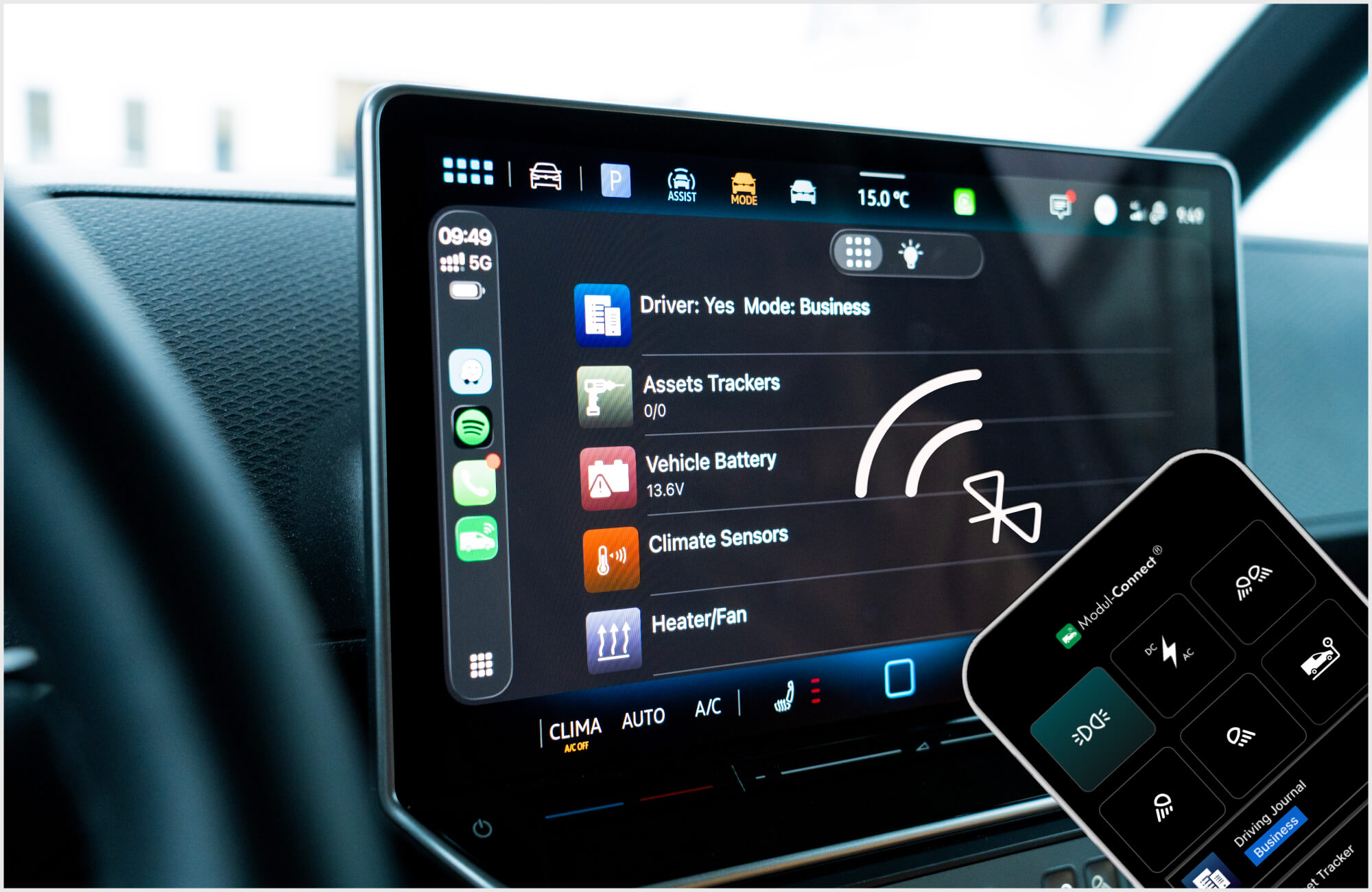
Modul-Connect brings the working van's key functions together through a single connected platform.
For the engineer, that means controlling and viewing vehicle conversion functions through the OEM infotainment screen using a familiar interface, rather than adding another screen or collection of controls to the cab.
For the fleet manager, it means visibility of what is happening across the working vehicle, not just where the vehicle is, not just where the tools are. That distinction matters.
A utility fleet needs to know more than whether a van has arrived at site. It needs to know whether it is being operated safely, whether its equipment is where it should be, whether it is carrying the right load and whether the vehicle is ready to do the job.
Know what is happening before the van leaves
Overloading is a real problem… Utility engineers can carry substantial quantities of tools, equipment and materials, making vehicle weight an important consideration.
The Modul-Connect Weighing System provides vehicle weight and front-to-rear weight distribution through the vehicle's OEM screen, with accuracy of ±2.5% at full load. Instead of discovering a potential problem later, the driver can identify it before leaving the depot and take action.
And the value of that information doesn't stop with the driver. One fleet using Modul-Connect discovered that 69% of journeys in a particular month were overloaded. The issue was already suspected; the connected data provided the evidence needed to understand the scale of the problem and act on it.
Protect the equipment that keeps engineers working
For utilities, the vehicle is often carrying thousands of pounds' worth of tools and specialist equipment. Losing one critical piece of equipment can mean more than the cost of replacing it. It can delay a job, disrupt an engineer's schedule and potentially require another visit.
Bluetooth Asset Trackers can provide an alert if a key tool or test instrument is left behind. The asset record can also contain information such as maintenance and calibration details.
Security can also be connected. A vehicle break-in can trigger an alarm while sending the event, time and location to the driver's phone and Customer Portal. It turns the van from a passive storage space into a monitored working environment.
Make every vehicle easier to manage
The real advantage for a utility fleet comes from putting this information in one place. The Customer Portal creates a record for each vehicle covering areas including weight, assets, maintenance, security, climate, mileage, auxiliary battery condition and heating usage.
That means fleet teams can move away from relying on individual drivers, spreadsheets or physical inspections to understand what is happening across the fleet.
One customers using the automated driving journal have on average saved around 30 minutes per user per week. Another operation previously had to visit every vehicle each month to download temperature records. For a large utility fleet, those small efficiencies can quickly become significant.
And then there is electrification
The case for connected technology becomes even stronger as utility fleets move towards electric vans. Heating, lighting, inverters, tools and other auxiliary equipment all consume stored energy.
Understanding how that equipment is actually used during a working day provides valuable information when deciding battery capacity, charging requirements and the specification of future vehicles.
In other words, connected technology isn't simply about making today's van smarter. It can help fleet managers make better decisions about tomorrow's van.
A connected van is becoming a fleet requirement
The utility sector is demanding more from its vehicles. Engineers need the right equipment, the fleet needs greater visibility, and businesses need to control operational costs while improving security and efficiency.
Managing each element independently makes that increasingly difficult. Modul-Connect brings those functions together — connecting the conversion, equipment, engineer and fleet manager through one system.
For utility fleets looking at their next generation of working vehicles, connected technology is no longer simply an interesting addition. It is becoming an important part of how the van is specified, operated and managed.
The question may no longer be “Do we need connected technology?” It may be “How much more could we see, control and improve if our vans were connected?”